Cross-contamination is one of the most persistent threats to laboratory animal facilities. Even in well-managed vivariums with established Standard Operating Procedures (SOPs), pathogens and contaminants can spread through seemingly routine activities.
While most facilities focus on disinfecting animal rooms, equipment, and cage wash areas, some of the greatest risks come from overlooked touchpoints, workflow gaps, and human behavior.
Reducing cross-contamination requires more than selecting an effective disinfectant. It depends on standardized cleaning procedures, staff training, proper facility design, and consistent adherence to biosecurity protocols.
Here are five commonly overlooked areas where cross-contamination can occur—and practical strategies to reduce the risk.
Why Cross-Contamination Matters
Cross-contamination can affect much more than animal health.
Potential consequences include:
- Disruption of ongoing research
- Loss of valuable animal colonies
- Increased diagnostic testing
- Additional labor and sanitation costs
- Delays in study timelines
- Biosecurity breaches
- Regulatory findings during inspections or accreditation visits
The Guide for the Care and Use of Laboratory Animals emphasizes that sanitation, husbandry, facility design, and personnel practices all contribute to maintaining animal health and supporting reliable research outcomes.
Source: National Academies Press. Guide for the Care and Use of Laboratory Animals, 8th Edition
https://nap.nationalacademies.org/catalog/12910/guide-for-the-care-and-use-of-laboratory-animals
1. Transport Carts and Animal Transfer Equipment
Today’s rodent enclosures are primarily made of polysulfone, a tough, autoclavable plastic known for its chemical durability. Polysufone is also naturally opaque. Over the last several years, cage manufacturers have made alterations in the structure/design of their cages. The cages have become clearer and have added more features. This has created some challenges when using certain disinfectants specifically when autoclaving out is introduced.
Through collaborative testing with leading cage suppliers, and at end user facilities, Contec and Virox have confirmed Peroxigard RTU and Peroxigard diluted from Concentrate are excellent and safe disinfectants for the reprocessing of these newer cages when using the appropriate processes.
Transport carts move throughout the facility, from receiving areas to housing rooms, procedure spaces, and cage wash. If they are not cleaned and disinfected between uses, they can become vehicles for transferring microorganisms between animal populations.
High-risk items include:
- Animal transport carts
- Cage transport racks
- Feed carts
- Waste collection carts
- Mobile procedure equipment
Best Practices
- Clean and disinfect carts between designated areas.
- Establish separate carts for clean and dirty workflows where practical.
- Include wheels, handles, and undersides in cleaning SOPs.
- Verify disinfectant contact times according to the manufacturer's instructions.
2. Door Handles, Push Plates, and Touchscreens
High-touch surfaces are easy to overlook because they rarely appear visibly soiled.
Common examples include:
- Door handles
- Push plates
- Light switches
- Computer keyboards
- Touchscreen monitors
- Time clocks
- Refrigerators and freezer handles
Because multiple employees interact with these surfaces throughout the day, they can contribute to indirect pathogen transmission.
The Centers for Disease Control and Prevention (CDC) recommends routine cleaning and disinfection of frequently touched surfaces as part of an effective environmental infection prevention program.
Source: CDC. Environmental Infection Control Guidelines
https://www.cdc.gov/infection-control/hcp/environmental-control/index.html
Best Practices
- Identify high-touch surfaces in every room.
- Include them in daily cleaning schedules.
- Assign responsibility within SOPs.
- Use disinfectants with EPA-registered efficacy claims appropriate for the facility.
3. Shared Equipment Between Rooms
Equipment that moves between rooms can bypass many of the controls designed into barrier facilities.
Examples of equipment include:
- Scales
- Procedure tables
- Anesthesia machines
- Imaging equipment
- Laptops and tablets
- Vacuum units
- Tool kits
Unless equipment is properly cleaned before entering another room, contaminants can travel with it.
Best Practices
- Clean and disinfect shared equipment before transfer.
- Maintain room-specific equipment whenever possible.
- Use checklists to verify equipment decontamination.
- Clearly label equipment assigned to restricted areas.
4. PPE Transition Areas
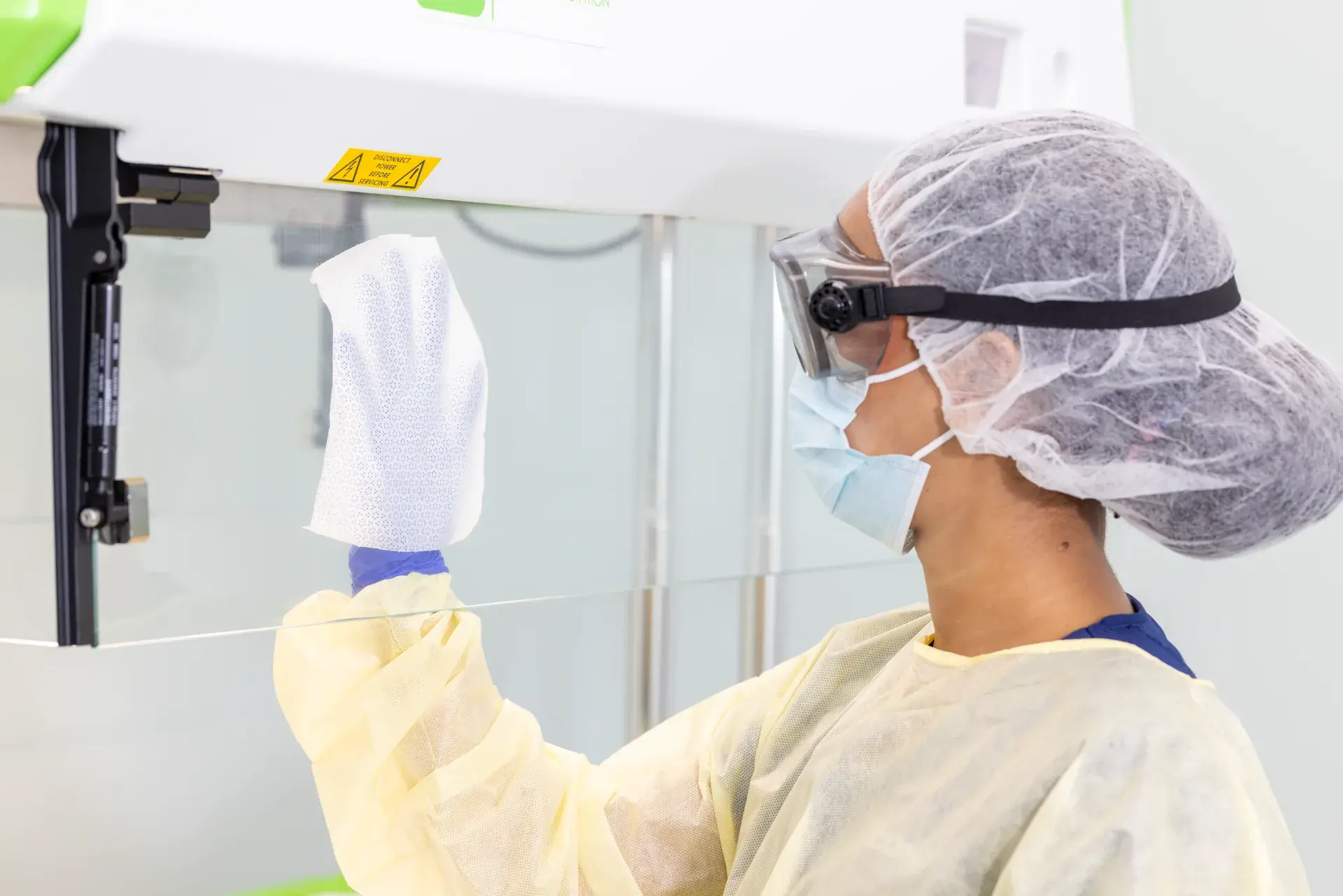
Personal protective equipment (PPE) protects both personnel and animals—but only when it is used correctly.
Common contamination risks include:
- Touching contaminated gowns while removing gloves
- Reusing disposable PPE
- Carrying contaminated shoe covers into clean areas
- Improper donning and doffing sequences
- Inadequate hand hygiene during transitions
The National Institutes of Health Office of Laboratory Animal Welfare (OLAW) emphasizes that occupational health and safety programs, including PPE and personnel practices, should be based on risk assessment and integrated into the overall animal care and use program.
Source: OLAW. Guide for the Care and Use of Laboratory Animals resources
https://olaw.nih.gov/guidance/guide
Best Practices
- Post visual PPE instructions at entry points.
- Reinforce hand hygiene during every room transition.
- Observe staff periodically for technique.
- Include PPE competency assessments in onboarding and annual refresher training.
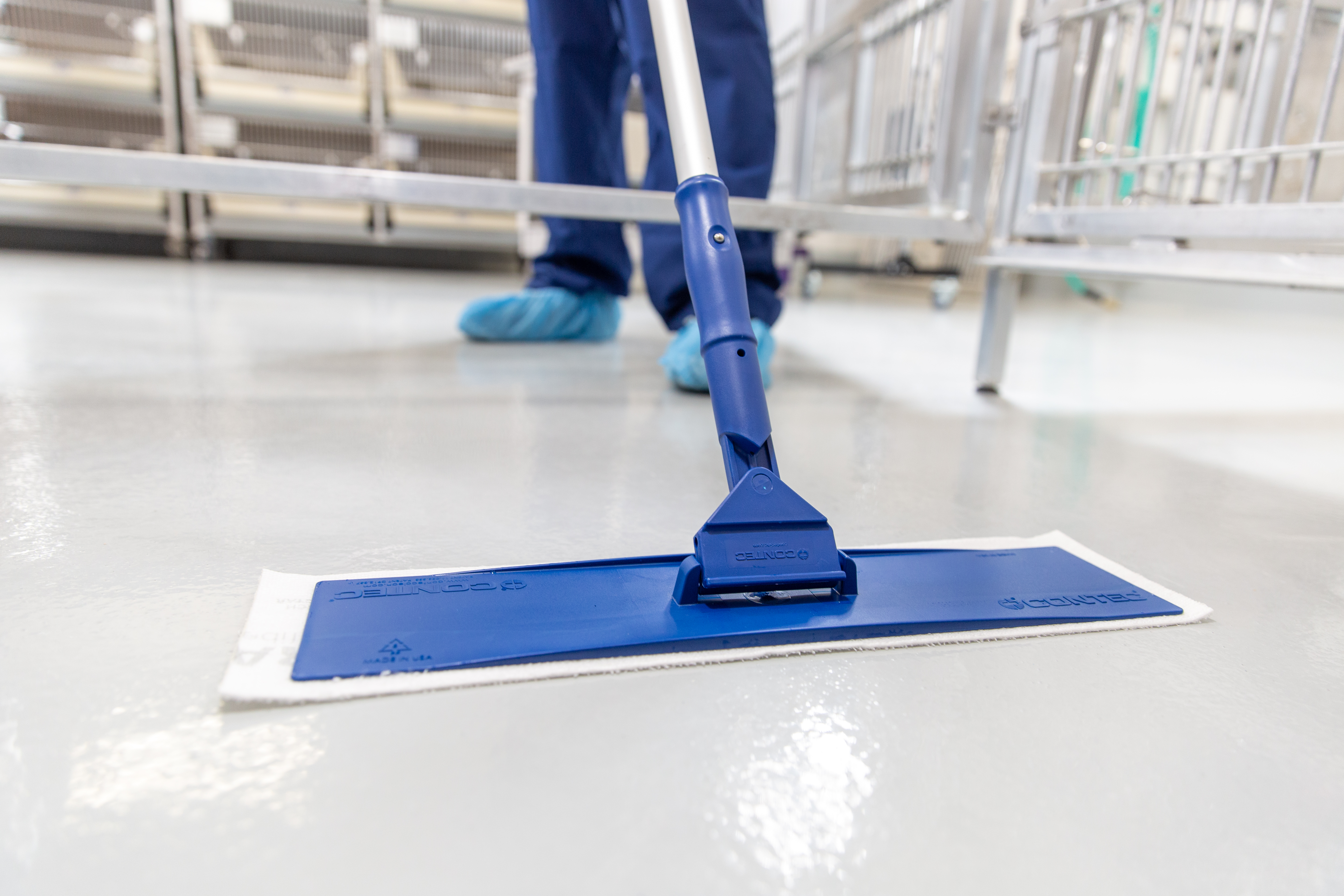
5. Cleaning Tools and Supplies
Ironically, the tools used for cleaning can become sources of contamination if they are not managed appropriately.
Examples of potentially contaminated tools include:
- Mop heads
- Buckets
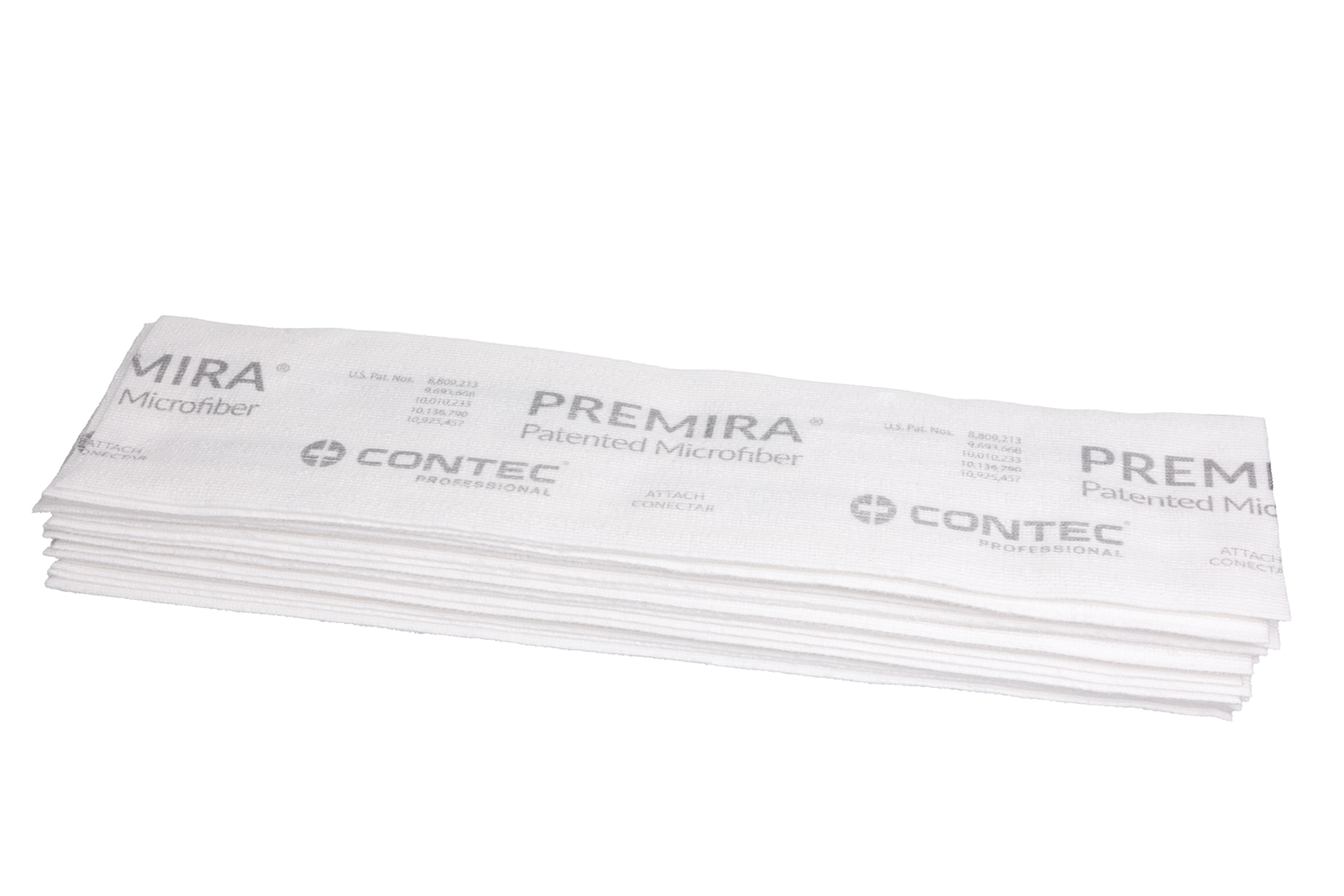
- Reusable wipes
- Brushes
- Squeegees
- Spray bottles
Using the same cleaning tools in multiple areas without appropriate laundering, replacement, or disinfection can spread contaminants rather than remove them.
The CDC recommends maintaining and cleaning environmental services equipment to prevent contamination of surfaces during routine cleaning.
Source: CDC. Environmental Infection Control Guidelines
https://www.cdc.gov/infection-control/hcp/environmental-control/index.html
Best Practices
- Use color-coded cleaning tools by area or function.
- Replace damaged or worn equipment promptly.
- Store clean and used equipment separately.
Cross-Contamination Is Often a Workflow Problem
When contamination events are investigated, the root cause is often not a failure of the disinfectant itself. Instead, it may involve:
- Inconsistent SOPs
- Improper contact times
- Missed high-touch surfaces
- Equipment moving between rooms
- Workflow shortcuts
- Insufficient staff training
- Documentation gaps
The American Association for Laboratory Animal Science (AALAS) emphasizes training and professional development as essential components of quality laboratory animal care programs, reinforcing the importance of consistent personnel practices alongside facility sanitation.
Source: AALAS
https://www.aalas.org/
Building a Stronger Cross-Contamination Prevention Program
Reducing cross-contamination requires a comprehensive approach that integrates products, people, and processes.
Consider evaluating your facility's program by asking:
• Are cleaning responsibilities clearly assigned?
• Are high-touch surfaces identified in SOPs?
• Is shared equipment cleaned before entering another room?
• Are transport carts included in routine sanitation schedules?
• Are cleaning tools dedicated to specific areas?
• Are PPE procedures regularly observed and reinforced?
• Are employees trained on why these practices matter—not just how to perform them?
Facilities that routinely review these questions are better positioned to maintain biosecurity, protect research integrity, and support animal welfare.
Key Takeaways
Cross-contamination does not always begin with major procedural failures. More often, it starts with small, routine actions that are easy to overlook.
By focusing on transport equipment, high-touch surfaces, shared equipment, PPE transitions, and cleaning tools, vivarium managers can address some of the most common pathways for contamination.
Combined with evidence-based SOPs, validated disinfectants, ongoing staff training, and regular program reviews, these practices can help create a more resilient sanitation program—one that supports research continuity, regulatory compliance, and the health of both animals and personnel.
Need Help Evaluating Your Cleaning Protocols?
Every vivarium has unique workflow challenges. Through our Process Improvement Program, featuring a Complimentary Contamination Control Assessment (CCA), our specialists can help you identify potential contamination risks and recommend cleaning and disinfection solutions that support your SOPs, compliance goals, and research objectives.

Frequently Asked Questions
What is cross-contamination in a vivarium?
Cross-contamination occurs when microorganisms, allergens, or other contaminants are unintentionally transferred from one animal, room, piece of equipment, or surface to another, potentially affecting animal health, research integrity, and biosecurity.
What are the most common sources of cross-contamination?
Common sources include transport carts, shared equipment, high-touch surfaces, improperly managed cleaning tools, and incorrect PPE use during room transitions.
How can a vivarium reduce cross-contamination?
Facilities can reduce risk by implementing validated cleaning SOPs, disinfecting shared equipment, cleaning high-touch surfaces routinely, using dedicated cleaning tools, reinforcing PPE practices, and providing ongoing staff training.
Why are high-touch surfaces important in contamination control?
High-touch surfaces are contacted frequently by multiple employees throughout the day, making them potential reservoirs for indirect pathogen transmission if they are not cleaned and disinfected routinely.
Does AAALAC require specific cross-contamination procedures?
AAALAC does not prescribe a single protocol. Instead, it evaluates whether institutions have science-based sanitation, biosecurity, and personnel practices that support animal welfare and align with the Guide for the Care and Use of Laboratory Animals.
.png)